Balance Durability and Quality: Essential Knowledge for Selecting Long-Life Moulds

Core Technical Factors Behind Mould Durability
1. Steel Grade and Heat Treatment
Material selection is widely recognized as one of the most influential factors affecting Mould service life. High wear-resistant tool steels and heat-resistant hardened steels are commonly used to handle repeated Moulding stress, and appropriate heat treatment helps support structural stability.
Industry sources also emphasize that heat treatment quality can play a major role. If temperature control is insufficient or cooling is uneven, internal stress may develop, increasing the risk of deformation or cracking. Because of this, Mould manufacturers with metallurgical knowledge and heat-treating capability tend to be better positioned to produce durable Moulds.
2. Structural Design and Stress Distribution
Durable Moulds do not rely on material strength alone. Engineering decisions—such as coolant passage layout, parting surface shape, shrinkage allowance, and stress-dispersion structure—can influence wear behavior. Structural analysis and CAE simulation are widely adopted across Mould design fields to anticipate deformation and reduce stress concentration around critical regions.
When these design approaches are applied, manufacturers may achieve more stable dimensional repeatability and reduce damage to wear-sensitive areas.
3. Machining Accuracy and Surface Finishing
Precision machining is another well-established contributor to Mould longevity. If forming surfaces are uneven or rough, abrasion can progress faster, and inconsistent tolerances may lead to product rejection or component failure.
High-precision milling machines, Electrical Discharge Machines (EDMs), and careful finishing processes play a significant role in ensuring dimensional stability.
Skilled machinists and inspection personnel are also essential, as factors such as tool wear management, decision-making on machining conditions, and measurement accuracy directly affect the long-term performance of the Mould.
Identifying Capable Long-Life Mould Manufacturers
When evaluating Mould suppliers, companies often value the following capabilities:
High-Precision Processing Technology
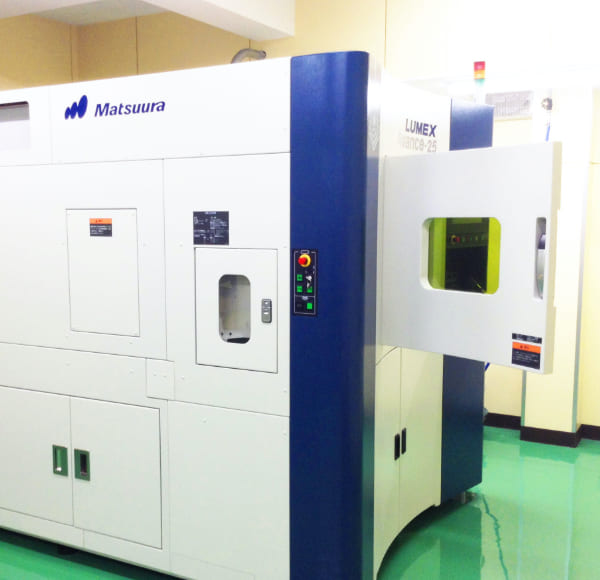
Equipment such as 5-axis machining centers and high-accuracy EDM systems allow detailed surface formation and tolerance control. However, machinery alone does not guarantee Mould life. Engineering expertise, finishing skill, and internal quality standards also contribute to reliable output.
Material and Heat Treatment Knowledge
Every Moulding application—resin, aluminum, rubber, or metal—requires a suitable steel selection and hardness balance. Manufacturers familiar with these conditions are better positioned to recommend appropriate solutions.
Inspection and Measurement Systems
Measurement equipment such as Coordinate Measuring Machines (CMMs) and 3D scanners ensures accurate dimensional inspection. A system that clearly presents measurement data makes it easier to verify quality and maintain traceability.
Project Experience and Case Transparency
Suppliers with experience in high-demand sectors—such as automotive and industrial equipment—often possess deeper understanding of stress behavior, cooling strategies, and tolerance management. Public information about past project types and supported industries can help customers evaluate capability.
Durability-Focused Mould Manufacturing at Shippo Moulds Co., Ltd
Shippo Moulds Co., Ltd, as a long‑established Japanese Mould manufacturer, combines materials engineering, precision machining, and stress‑considered design to produce Moulds that support long‑term Moulding performance. The company selects steel materials according to Moulding environments such as material type, Moulding conditions, and temperature changes (thermal cycles), and examines heat‑treatment methods to suppress deformation and wear.
Shippo also incorporates mechanical analysis and CAE simulation to evaluate stress concentration. These engineering processes are intended to assist dimensional stability and support Mould strength across repeated Moulding operations.
Furthermore, strong emphasis is placed on surface finishing. Through the application of direct machining, the removal of the white layer by shot blasting, and careful polishing performed by skilled technicians, the Moulding surfaces are finished in a way that suppresses crack propagation. This contributes to improved Moulding efficiency and appearance quality.
In addition to manufacturing, lifecycle services such as Mould repair, maintenance, cooling‑channel cleaning, Mould‑matching checks, and Mould inspections are also provided. Continuous support helps maintain stable operation and reduces the risk of unexpected downtime over the long term.
Summary
A long-life Mould is not simply defined by material hardness or production cost—it reflects a combination of structural design, machining accuracy, heat treatment control, and ongoing maintenance. When these elements are integrated, manufacturers may benefit from improved production stability, fewer interruptions, and more predictable operating schedules.
For companies seeking durable Moulds with technical depth and engineering transparency, Shippo Mould Industry provides a structured approach that emphasizes design analysis, material knowledge, and precision processing. While individual Moulding conditions influence performance outcomes, long-term engineering focus can offer valuable support toward efficient mass production and consistent part quality.